Living with a small kitchen doesn't mean you can't be an avid baker. With the right organization strategies, you can create a highly functional baking space that rivals larger kitchens in efficiency and joy.
Over the years, I've helped hundreds of bakers transform tiny, cramped kitchens into organized havens. The secret isn't having more space – it's using the space you have more intelligently.
The Small Kitchen Mindset Shift
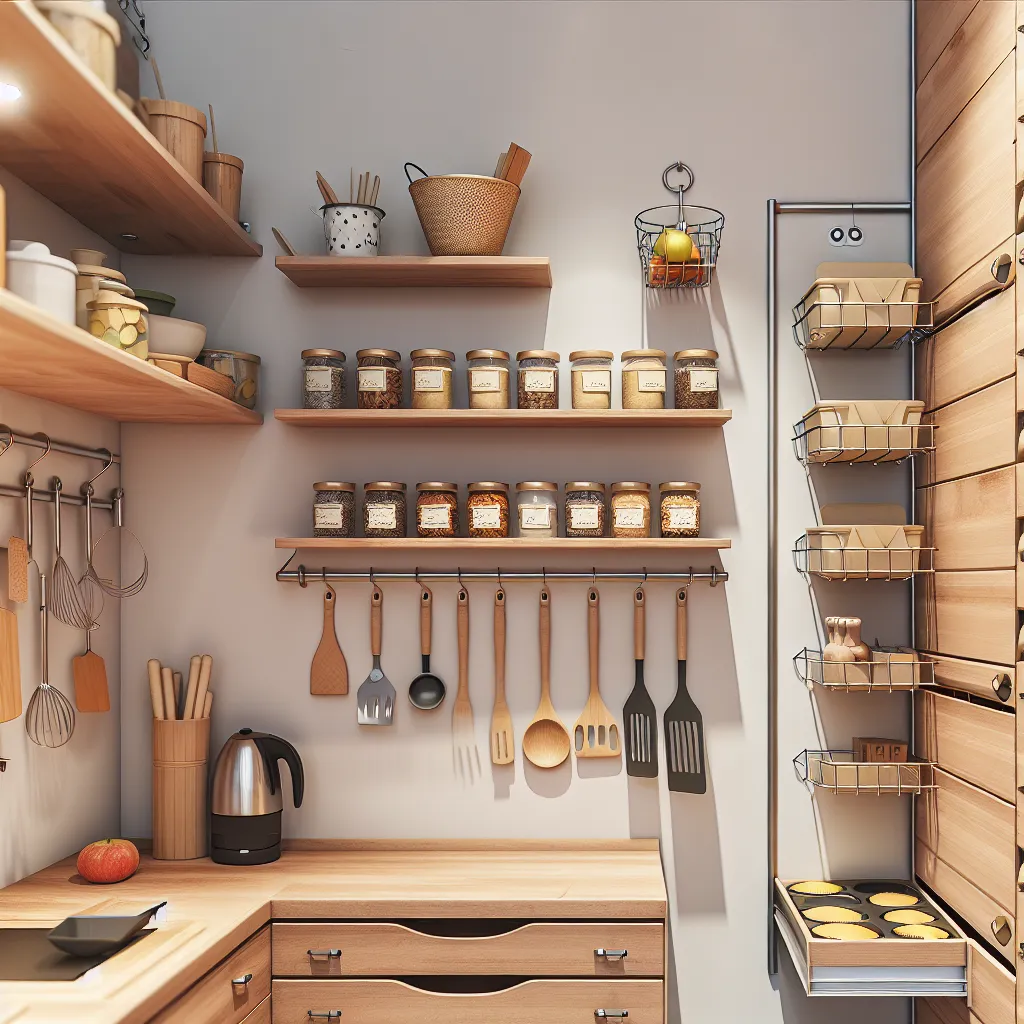
The first step in organizing a small kitchen is changing how you think about space. In a small kitchen, every square inch matters. You need to think vertically, utilize hidden spaces, and be ruthless about what you keep.
Small kitchens actually have some advantages: less space to clean, easier to reach everything, and they force you to be intentional about your tools. Many professional bakers prefer compact workspaces because everything is within arm's reach.
Vertical Space is Your Best Friend
When you can't expand outward, expand upward. Vertical space is the most underutilized asset in small kitchens.
Wall-Mounted Solutions
- Install floating shelves above counters for frequently-used items
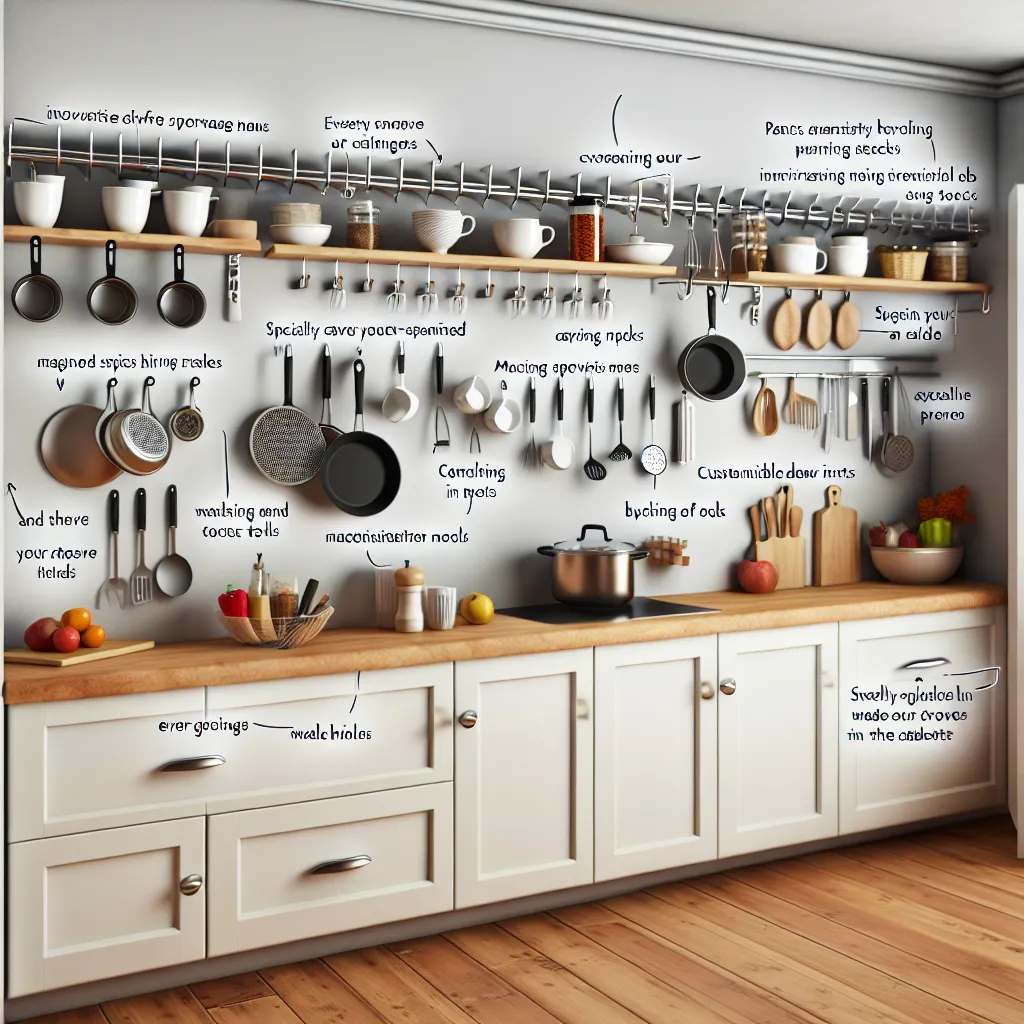
- Use magnetic knife strips for metal tools and utensils
- Hang pegboards for customizable tool storage
- Mount hooks under cabinets for mugs and measuring cups
- Install a wall-mounted spice rack to free up cabinet space
Cabinet Door Real Estate
The inside of cabinet doors is prime real estate that's often wasted. Add over-the-door organizers, adhesive hooks, or small baskets to store measuring spoons, pot holders, or small tools.
Strategic Tool Selection
In a small kitchen, every tool needs to earn its place. This means being selective about what you keep and prioritizing multi-functional items.
The Essential Baking Tools for Small Spaces
- One set of nesting measuring cups and spoons (not multiple sets)
- Two versatile mixing bowls instead of many sizes
- A single high-quality baking sheet (half-sheet size)
- One 9-inch round cake pan and one 9x13 inch pan
- A hand mixer instead of a stand mixer (or store stand mixer elsewhere)
- Collapsible silicone tools that store flat
Ask yourself: "Have I used this in the past three months?" If not, consider storing it elsewhere or donating it. Small kitchens require ruthless editing.
Clever Storage Hacks
1. Tension Rod Dividers
Install tension rods vertically in deep cabinets to create slots for baking sheets and cutting boards. This $5 solution is a game-changer for pan storage.
2. Shelf Risers
Double your cabinet space with shelf risers. Store items underneath and on top, effectively creating two levels where you once had one.
3. Lazy Susans
Place rotating organizers in corner cabinets to make every item accessible. Perfect for baking supplies, spices, and small ingredients.
4. Clear Containers
Transfer ingredients to clear, stackable containers. You'll see what you have at a glance and maximize shelf space with their uniform shape.
5. Drawer Dividers
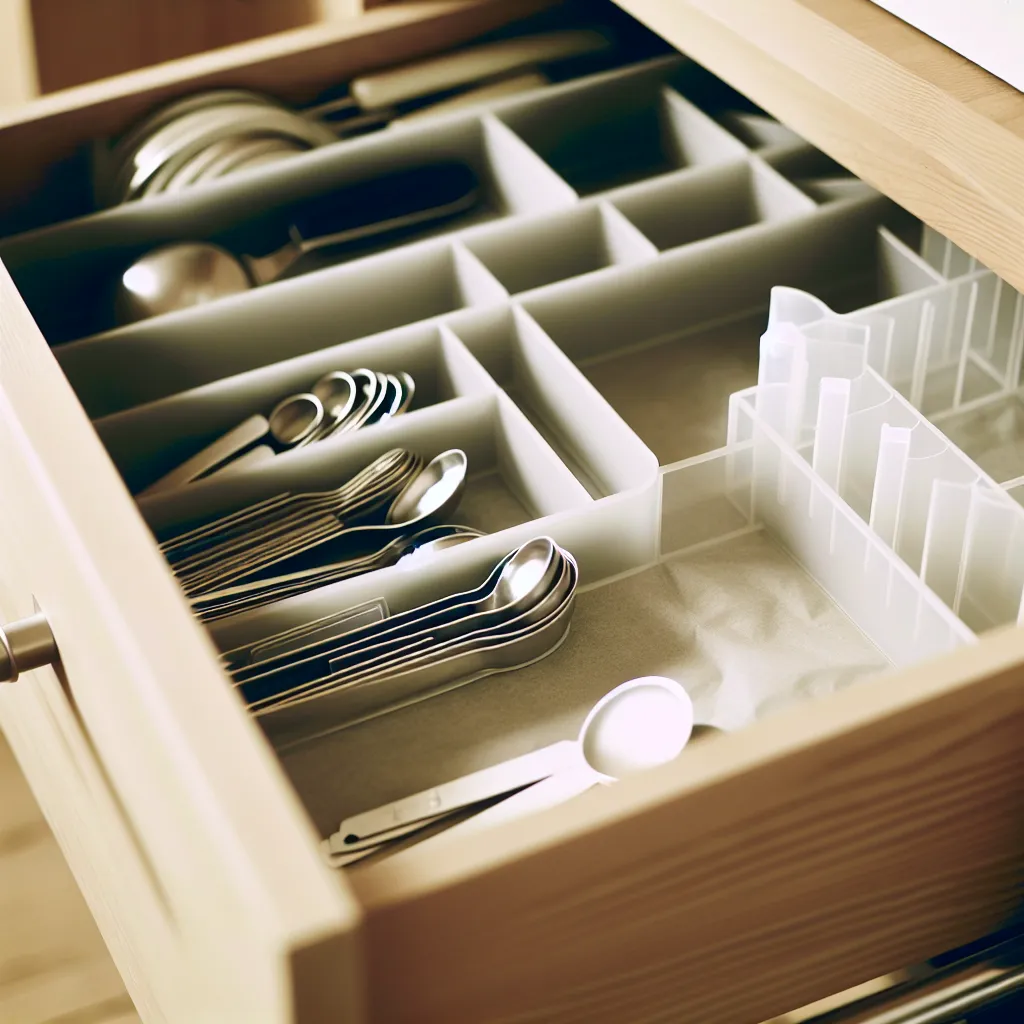
Even small drawers can hold an amazing amount when properly divided. Use adjustable dividers or DIY cardboard solutions to create compartments for every tool.
The Rolling Cart Strategy
A rolling kitchen cart can be a small kitchen's best friend. Use it as:
- Extra counter space that can be moved aside when not needed
- Mobile storage for baking supplies
- A dedicated baking station you can roll out when needed
- Additional storage that can be wheeled into another room if necessary
Choose a cart with shelves and a butcher block top for maximum functionality.
Create Zones, Not Chaos
Even in a small kitchen, establishing zones improves efficiency:
- Prep Zone: Mixing bowls, measuring tools, cutting boards
- Baking Zone: Pans, oven mitts, cooling racks (near the oven)
- Ingredient Zone: Flour, sugar, spices, extracts
- Tool Zone: Whisks, spatulas, rolling pins
Zones don't need to be large – they just need to be logical and consistent.
The Minimalist Advantage
Small kitchens force you to embrace minimalism, which is actually a gift. You'll spend less time searching through clutter, less time cleaning, and more time actually baking.
Keep only your favorite recipes accessible. Store seasonal items (holiday cookie cutters, specialty pans) outside the kitchen during off-seasons. Embrace the "one in, one out" rule – when you get a new tool, donate an old one.
Real-Life Small Kitchen Transformation
My client Rachel had an 80-square-foot kitchen and thought she'd have to give up baking. We implemented these strategies and now her kitchen is more organized than many large kitchens I've seen.
Key changes we made:
- Installed three floating shelves for ingredient storage
- Added magnetic strips for metal tools
- Used tension rods to organize her baking pans vertically
- Purchased a rolling cart for extra workspace
- Reduced her baking tool collection by 40%
"I actually prefer my small kitchen now," Rachel told me. "Everything I need is within reach, and I don't waste time searching through cluttered drawers. I bake more now than I did in my old larger kitchen."
Your Action Plan
Ready to transform your small kitchen? Start with these steps:
- Measure your space and identify all storage opportunities (walls, cabinet doors, vertical spaces)
- Declutter ruthlessly – remove anything you haven't used in three months
- Invest in one or two key organization tools (shelf risers, tension rods, or a rolling cart)
- Create zones for different baking activities
- Commit to the "one in, one out" rule going forward
Remember: a small kitchen is not a limitation – it's an opportunity to create a highly efficient, personally curated baking space that sparks joy every time you use it.
Ready to Organize Your Small Kitchen?
Download our complete Small Kitchen Organization Guide with measurements, shopping lists, and step-by-step instructions.
Download Free GuideHave questions about organizing your small kitchen? Leave a comment or contact us – we'd love to help!